Emergency Lighting Certificate in London
Emergency lighting has one job: to keep an escape route visible when the power fails. We carry out the full duration test required by BS 5266, replace what has failed, and certify the system properly.
Emergency Lighting prices
Priced on the number of emergency light fittings. All prices include VAT.
- All prices include VAT
- No call-out charge on booked work
- Any variation agreed before you book
Emergency Lighting Certificate
Up to 3 lights
Up to 6 lights
Up to 12 lights
Larger installations across multiple floors quoted per fitting. Replacement fittings, batteries and exit signage supplied and installed at the same visit.
What the test involves
Full duration test
Mains supply isolated and every fitting run on battery for its rated duration, normally three hours. Anything that dims or fails early is recorded and replaced.
Coverage and siting
We check escape routes, changes of level, stairs, final exits, call points and firefighting equipment are all adequately illuminated.
Charge and fault indication
Charging circuits and healthy-charge indicators verified so a failed battery is visible before an emergency rather than during one.
Signage
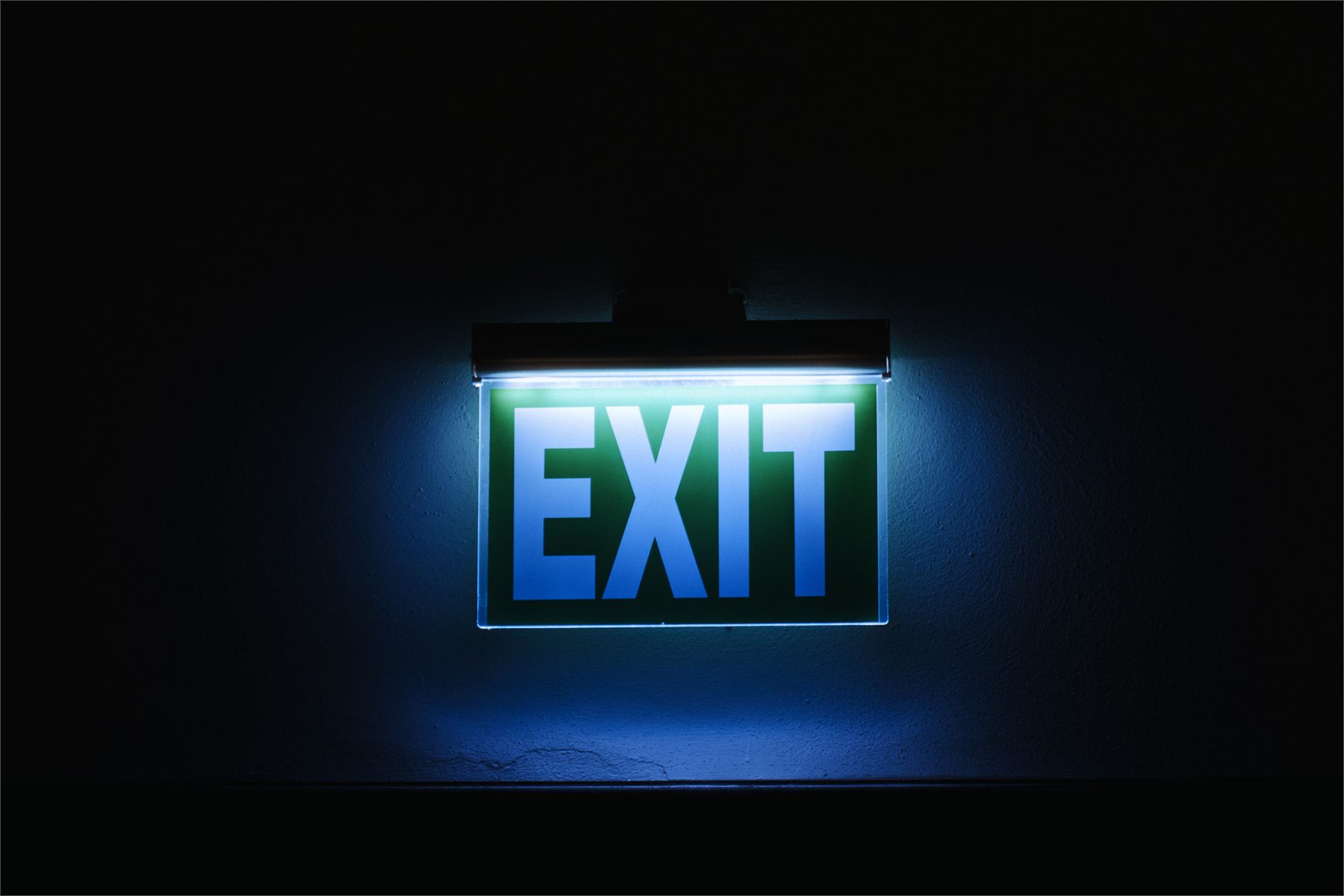
Exit and directional signage checked for correct type, height, viewing distance and legibility, and replaced where it no longer meets standard.
Certification and logbook
A BS 5266 test certificate listing every fitting and result, plus a logbook so monthly flick tests can be recorded between annual visits.
Why it is tested every year
Emergency lighting is required in the common parts of blocks of flats, in HMOs and in virtually all non-domestic premises. The Fire Safety Order requires escape routes to be adequately illuminated, and BS 5266-1 sets out how that is achieved and verified.
Batteries are the weak point. A pack that has sat on charge for four years will often light for a few minutes rather than the three hours it is rated for, and there is no way to know without discharging it. That is precisely why the annual full-duration test exists.
Who needs one
- Freeholders and managing agents of blocks with communal escape routes
- HMO licence holders, where it is normally a licence condition
- Offices, retail units, restaurants, hotels and places of assembly
- Care homes, surgeries and premises with less mobile occupants
- Warehouses, workshops and industrial units
- Anyone acting on a fire risk assessment action point
Three steps to your certificate
Booked, inspected and certified — usually inside 48 hours from your first call.
01
Book
Call, WhatsApp or send the quote form. We confirm your fixed price and a slot that suits your tenants.
02
Inspect
A qualified engineer attends, carries out the inspection in full and talks you through anything that needs attention.
03
Certify
Your certificate is issued electronically within 24 hours, ready to forward to tenants, agents or the council.
Emergency Lighting FAQs
Three hours is standard for most premises. One hour is permitted in a small number of cases where the building can be fully evacuated and not reoccupied until supply is restored.
A short functional test monthly, recorded in the logbook, and a full-duration test annually, certified. We handle the annual test and set you up for the monthly ones.
Most licensable HMOs require it on the escape route, particularly three-storey properties. The fire risk assessment determines the requirement.
We record the failure and quote for replacement. Most failures are the battery pack rather than the fitting, and can often be replaced during the same visit.
The lighting circuit is isolated for the duration, so it is best done outside peak hours commercially. In residential blocks it is rarely noticed.
Other services we provide
Book more than one and we complete them in a single visit — one appointment for your tenants instead of several.
Why clients keep referring us
Book your safety certificate today
Qualified, insured engineers across London. Same-day appointments and certificates issued electronically within 24 hours.